Volcanoes, Waterfalls & Whales: Why Dominica Is the Nature Island
Note: This is a fictionalized travel diary created from traveler experiences, local insights, and destination research. While the story is fictional, the places, activities, and destination information are based on real experiences in Dominica.
I came to Dominica for the diving. Most people do. But Dominica has a way of pulling you in directions you didn't plan for, and by the end of the week I had hiked to a waterfall tall enough to disappear into mist, watched a sperm whale and her calf from the surface of the open ocean, danced to Creole drumming under a night sky, and cooked Dominican food from scratch in a garden. The diving was excellent. Everything else was unexpected.
Welcome to the Jungle (Bay)
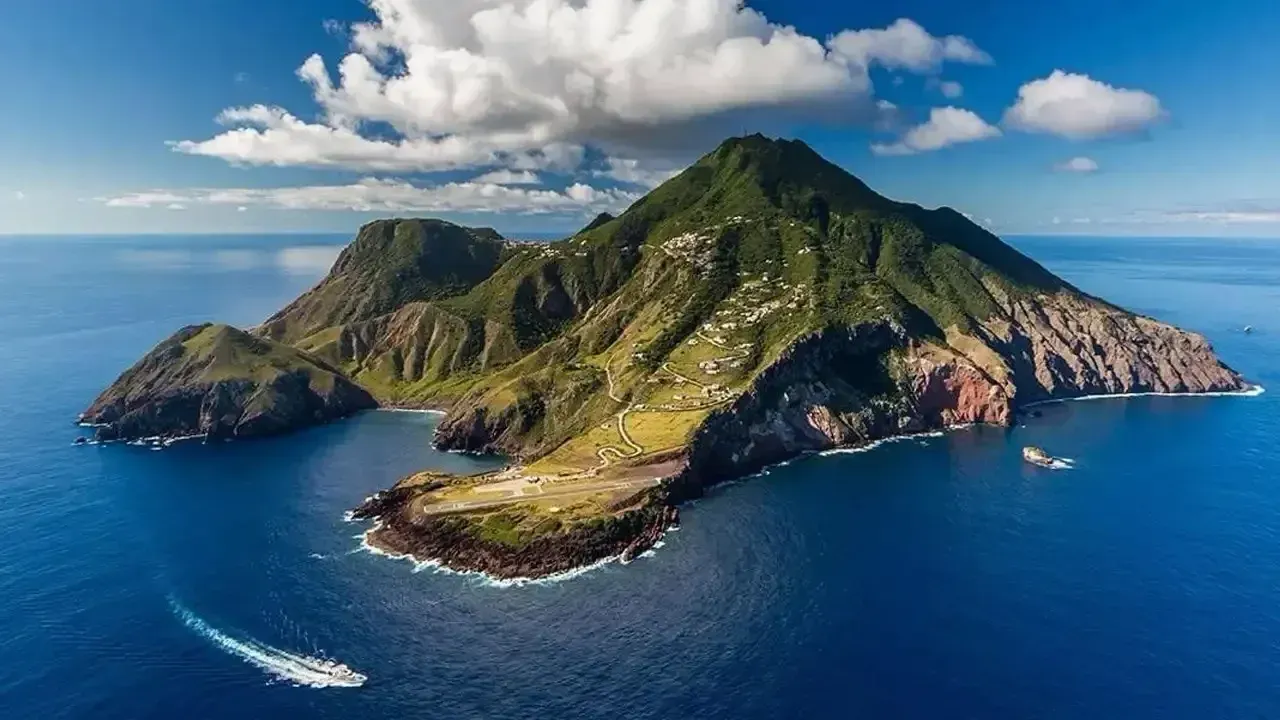
The flight into Dominica is small-plane only, which sets the tone. You feel every thermal and see the island rise from the sea: dark green, steep, dense. No long white beaches visible from the air. Just jungle clinging to volcanic ridges.
A Jungle Bay driver met me at the airport. The resort sits on a hillside above the Caribbean, tucked so far into the trees that the villas almost vanish. Mine was a private treehouse-style unit with hardwood floors, a canopy bed, and an outdoor shower open to the forest. A gecko was already living on my wall. I left him alone.
The first evening, I sat in the balcony hammock and watched the light drop over the Caribbean. Scott's Head Point was visible in the distance, the headland where the Atlantic meets the Caribbean. Tree frogs started up just after dark. By eight o'clock I was asleep.
Beneath the Caribbean Blue
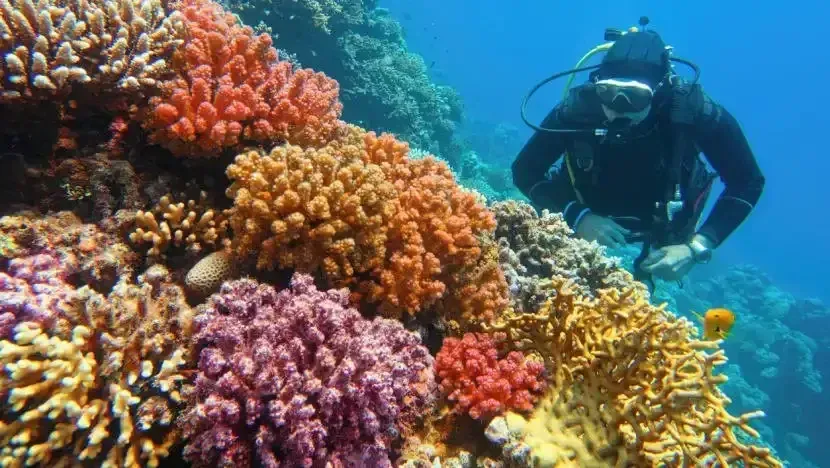
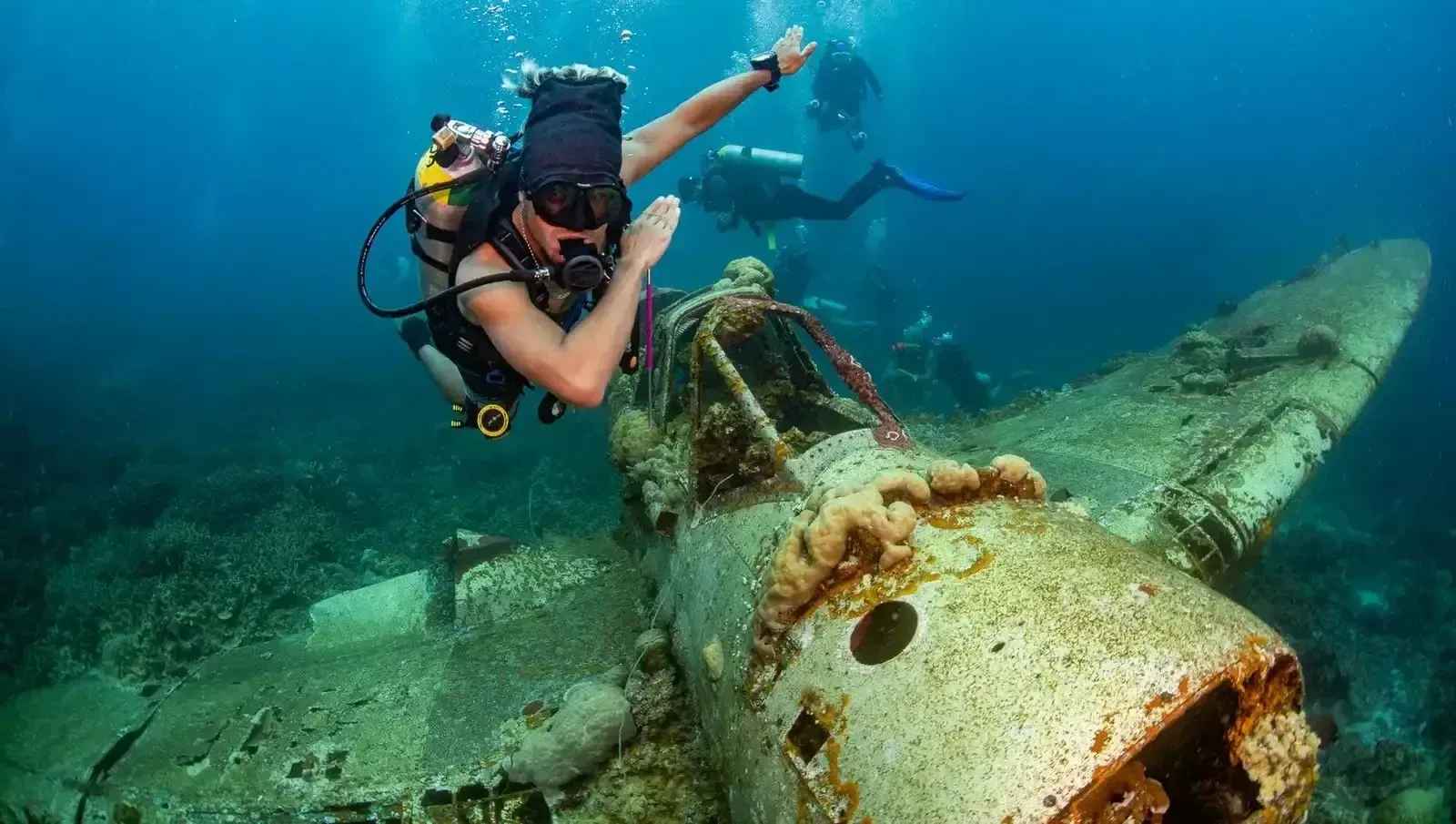
Diving in Dominica is not what most people expect from the Caribbean. There are no famous wrecks, no hammerhead aggregations, no drift diving on strong currents. What there is: volcanic seascape, exceptional water clarity, and a reef ecosystem that feels genuinely healthy. The critter density is high, the coral is in good shape, and the dive sites have character.
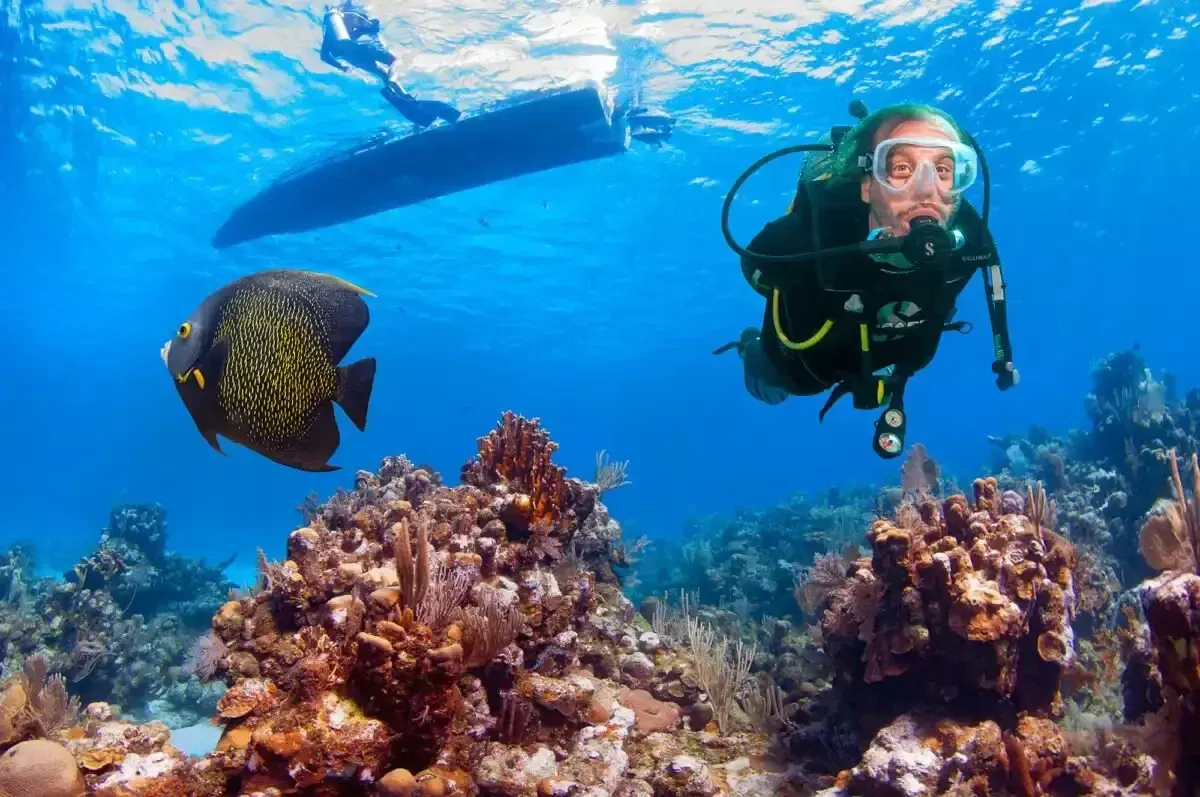
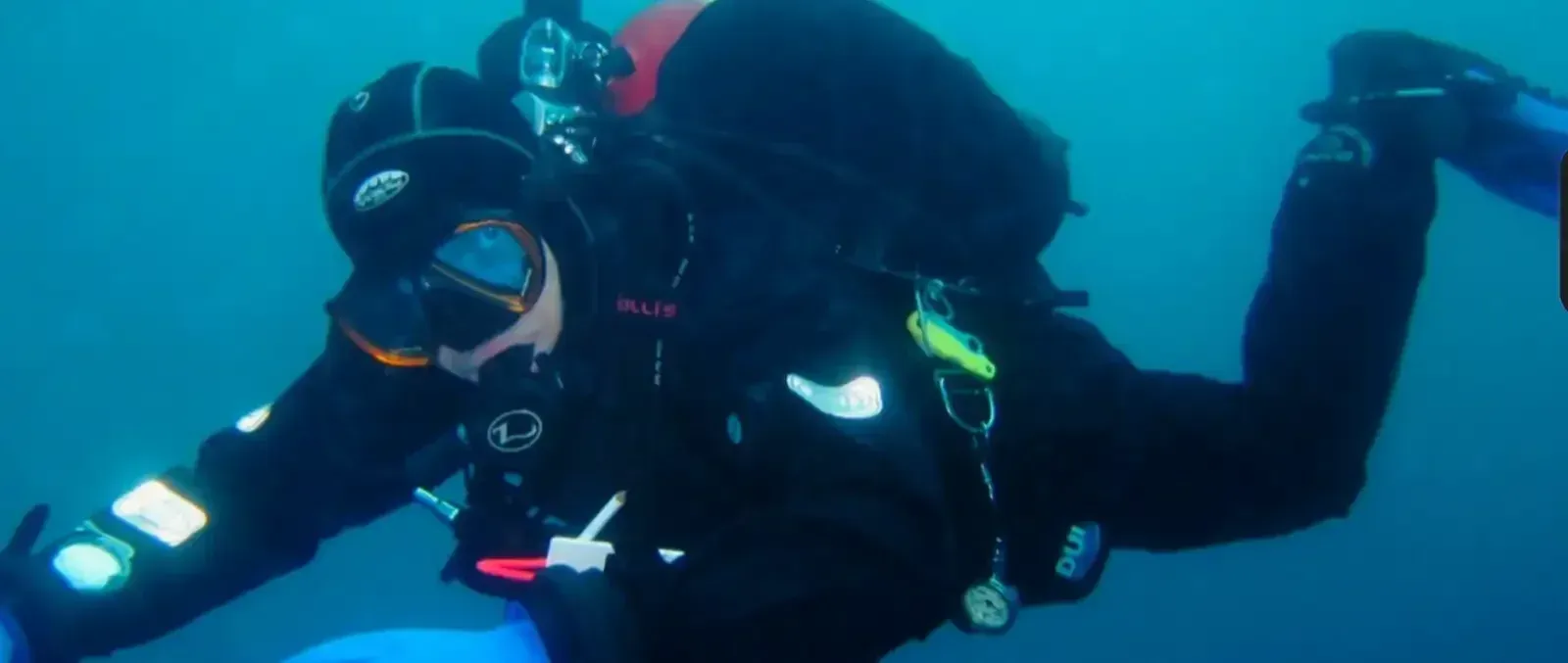
Champagne Reef was the first morning. The name comes from the volcanic gas venting from the seafloor, streams of bubbles rising constantly from the sand and rock. Descending into them feels strange in a good way, warm and fizzing against your skin. The reef itself is colorful and busy: sponges in yellow and orange, schools of blue tangs, a green turtle that moved off slowly and without urgency when we got close. Our guide found a frogfish sitting motionless on a sponge, practically invisible until he pointed directly at it, and a seahorse curled around a sea fan maybe fifteen feet down. Visibility was around 80 feet. The water was 82 degrees. It was an easy, satisfying dive.
Dangleben's Pinnacles later in the week was a different kind of dive. Five underwater pinnacles rising from depth, with a mild current running through. The fish life was dense: soldierfish, jacks, barracuda moving in loose formation through the blue. During the safety stop, a pair of squid drifted over and hovered near us, their bodies shifting color. They stayed for almost two minutes before losing interest.
We also dived a swim-through the locals call Swiss Cheese, a rock formation with enough holes in it that sunlight comes through in separate shafts. On the far side, the reef drops off into deep water. Hanging at the edge and looking down is one of those moments where you feel the size of the ocean in a real way.
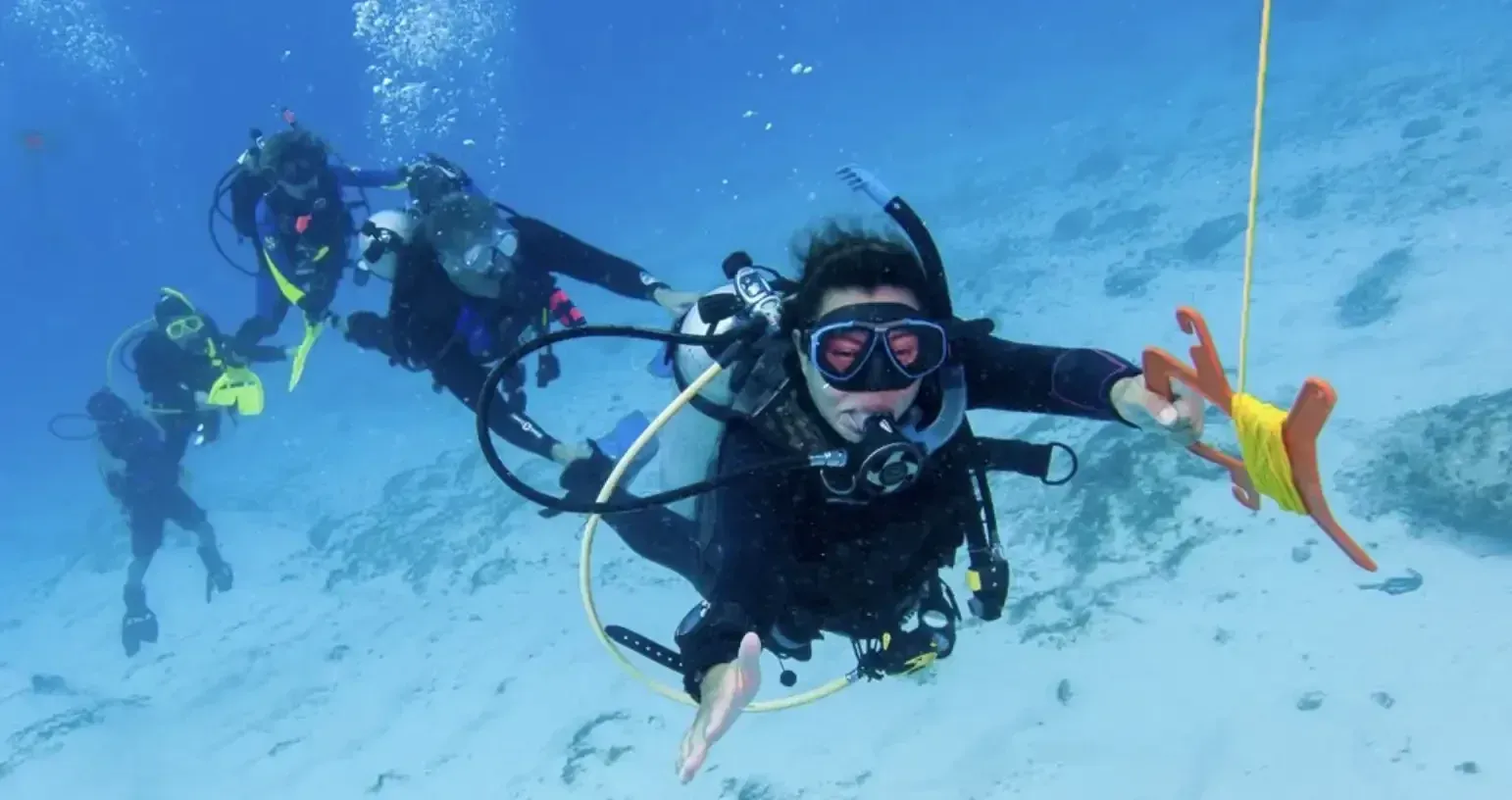
We finished every afternoon back at Jungle Bay. Rum punch, logbooks, and the specific satisfaction of multiple dives in good conditions. The group I was with was small, which helped. No crowded surface intervals, no waiting around.
The Whale Morning
Dominica has a resident population of sperm whales off its west coast. Not migratory, not seasonal in the way most whale watching destinations work. They live here. The best months for in-water encounters are roughly November through March, when seas are calmer, but sightings from the boat happen year-round.
We left early from the west coast. The captain used a hydrophone to listen for clicks in the water, which is how you find sperm whales before you can see them. There was about an hour of nothing: flat sea, the boat idling and drifting, a few people getting quiet in the way people do when they're not sure it's going to happen. One person in our group had done this before and hadn't seen anything. She was managing her expectations out loud.
Then the captain cut the engine. A blow appeared maybe 200 meters off the bow, a low column of mist angled forward the way sperm whales exhale. As we approached slowly, a second shape surfaced beside the first. A female and her calf, logging at the surface.
The crew gave the go-ahead to enter. I slipped in quietly and kicked toward them. The water was deep blue and clear. I could hear the clicks clearly through the water, a steady series of them. The calf moved around her in slow loops.
I didn't get long. Maybe three or four minutes before the mother began to angle downward. I dove a few feet to watch her descend, and caught the fluke as she went: wide, notched, rising and then gone. The calf followed.
Back on the boat, nobody said much for a few minutes. That's usually the sign of a real experience. I want to be honest about what it was: brief, a little disorienting, and completely unlike anything I'd done before. It was not a long warm encounter with eye contact and mutual understanding. It was three minutes in the open ocean with an animal the size of a truck who decided we were not interesting enough to stay for. That was more than enough.
Rainforest, Waterfalls, and Island Culture
Dominica calls itself the Nature Island, and it earns it. The interior of the island is volcanic, steep, and genuinely wild. On a day between dives, I joined a guided hike to Middleham Falls, one of the tallest waterfalls on the island.
The trail was harder than the description suggested. The first section is fine, wide and shaded, but the lower section to the pool is steep and wet, and I slipped twice on the way down. Our guide was patient about it. The forest itself was the point anyway: towering gomier trees wrapped in ficus vines, tiny orchids on branches, the sound of the canopy shifting in the wind. Halfway up, a pair of Jaco parrots crossed the trail above us, fast and loud, green and blue. Our guide grinned like he'd arranged it.
The falls drop over 200 feet into a pool at the base. The water coming off the rock face is cold, noticeably colder than the sea, and I hesitated for a second before jumping in. Worth it. I floated on my back under the falls for a few minutes, looking up at the water and the jungle above it, and felt the particular tiredness that comes from doing something physical in a beautiful place.
The cultural side of the stay surprised me more than I expected. One evening, Jungle Bay brought in drummers and dancers from a nearby village for a cultural night on the property. The drumming was the kind that gets into your chest rather than just your ears. By the end of it, most of the guests were on their feet attempting the traditional moves. Some of us were better than others. I was not among the better ones.
There was also a cooking class, which I almost skipped thinking it would be a demonstration. It wasn't. We started in the resort's organic garden picking herbs and vegetables, then spent two hours making pumpkin callaloo soup and fried plantains from scratch. The chef taught the class the way a home cook teaches, not a culinary instructor. Practical and a little chaotic. We cracked coconuts the traditional way, which took longer than expected and left my palms sore. The soup was good. Better, probably, because we'd made it ourselves.
I also spent an afternoon in Roseau at the farmers market, mostly wandering. The vendors were direct and friendly and didn't particularly need me to buy anything. I bought soursop, a bag of local spices, and a bottle of bay rum from a woman who gave me detailed instructions on how to use it that I will probably forget. Our hiking guide spent the drive back telling me about the island's volcanic history, including the boiling lake in the interior, which he described as something between a science project and a warning sign. I made a note to come back for that.
The Jungle Bay Way of Life
Jungle Bay works because of its scale. It's not a large resort. That means the staff know who you are by the second day, the dining is communal and unhurried, and the place never feels like a machine processing guests. The villas are spread across the hillside with enough distance that you don't hear your neighbors, and the common areas, the restaurant, the pool, the yoga platform, are genuinely pleasant rather than just functional.
The food was excellent. There was a grilled mahi-mahi night with breadfruit that I'm still thinking about. Breakfasts were straightforward: tropical fruit, coconut bakes, strong coffee. I had mine with coconut milk, and by day three the staff brought it that way without being asked.
Mornings started with yoga in the open-air studio above the pool. I'm not a regular practitioner, and the instructor was diplomatic about my form. What I got out of it was mostly the first hour of the day spent quietly with a view of the ocean before the schedule started.
The guests at Jungle Bay tend to be travelers rather than vacationers, people who want to do something on a trip rather than recover from the year. I had good conversations with a couple from Germany who were serious divers, a solo traveler from Canada who was working her way through every waterfall on the island, and Sam, the owner of Jungle Bay, who sat with different tables at dinner and talked about the resort and the island with the ease of someone who has done it for years and still means it.
On the last morning I sat on the balcony for a while before heading to the restaurant. The gecko was still on the wall. The tree frogs had gone quiet. The ocean was flat and bright below the hillside. I was ready to go and did not particularly want to leave, which is the right way to finish a trip.
FAQ
1. What is the diving like in Dominica?
Dominica's diving is built around healthy reefs, volcanic seascape, and critter life rather than big pelagics or wrecks. The standout sites include Champagne Reef, where volcanic gas vents create a continuous stream of bubbles from the seafloor, and Dangleben's Pinnacles, where strong fish concentrations and mild current make for active, engaging dives. Visibility is typically 60 to 100 feet, water temperature ranges from 79 to 84 degrees Fahrenheit year-round, and the reef is in genuinely good condition. Expect seahorses, frogfish, turtles, squid, eels, and dense schools of reef fish. Both new and experienced divers will find appropriate sites, from shallow reefs to deeper walls and swim-throughs.
2. When is the best time to snorkel with whales in Dominica?
Sperm whales are resident off Dominica's west coast year-round, not seasonal visitors, which makes Dominica one of the most reliable places in the world for whale encounters. In-water snorkel encounters are most commonly offered between November and March, when sea conditions are calmer and surface time near the whales is easier to manage. Boat-based sightings happen throughout the year. Encounters are never guaranteed; the whales are wild animals in the open ocean and the experience depends on conditions, whale behavior, and some luck. Choose an operator who follows responsible wildlife protocols, and adjust your expectations accordingly. A three-minute surface interaction with a sperm whale in the wild is more than most people will ever experience.
3. What makes Jungle Bay different from other Caribbean resorts?
Scale and authenticity. Jungle Bay is small enough that the staff know you quickly, and the property feels like it belongs to the island rather than being dropped onto it. The villas are built into a rainforest hillside with ocean views, the dining is communal and changes daily with local and seasonal ingredients, and the activities, including guided hikes, yoga, cooking classes, and spa, are integrated into the stay rather than offered as add-ons at a separate cost. The resort employs locally and works with nearby communities, which shows in the quality of the cultural experiences available. It suits travelers who want to engage with a destination, not just rest in it.
4. What is the food like at Jungle Bay?
Breakfasts are simple and good. Dinners are the social anchor of the day, eaten family-style in an open-air pavilion with a palm tree growing through the center of the room and the ocean visible beyond the pool. The fresh juice program alone is worth noting: a different fruit combination every morning, all local.
5. What is there to do in Dominica besides diving?
Quite a lot. Dominica's interior is one of the most active volcanic landscapes in the Caribbean, and most of the island's non-diving activities are built around it. Waterfall hikes are the most accessible: Middleham Falls and Trafalgar Falls are both within reach of a half-day. The Boiling Lake hike is a full-day challenge, roughly six hours round trip through the Valley of Desolation, and is considered one of the most demanding hikes in the Caribbean. For something less strenuous, the natural sulfur hot springs near Wotten Waven are an easy afternoon. Cultural options include visiting the Kalinago Territory, Dominica's indigenous community, and the Roseau farmers market. Snorkeling, kayaking, river tubing, and canyoning are all available for non-divers who want water activity. Whale and dolphin watching from a boat runs year-round. For those who want none of it, Jungle Bay's hammocks and spa are also a legitimate choice.
Recent Posts