


Why I Switched to a Backplate and Wing

Samuel Bachar • October 24, 2026

Share this article

In 2011, I was on a small boat in Cozumel with my wife and two other divers. I was already an experienced instructor, and I had bought a new BCD for the trip. The other two divers wore backplates and wings.

I had seen the setup before and never thought much about it. It looked like technical gear, something for cave divers, not something a recreational instructor needed on a reef. As the week went on, I used every surface interval to ask questions. They answered every question, and it was clear they cared about their equipment and had thought it through.

Later in the week, one of them made an offer: "Samuel, dive my BCD today, and I'll dive yours. After one dive, you won't want to go back."

I took the trade. Within minutes, I understood what he meant. The rig was streamlined, my buoyancy control was more precise than I had ever had it, and I moved through the water with a freedom I hadn't felt in my own gear. I finished the dive, handed the rig back, and knew I had a problem: a brand-new BCD I no longer wanted. When I got home, I sold it and bought my first backplate and wing. Over a thousand dives later, I still dive the same configuration.

Where It Came From

Buoyancy control is younger than scuba itself. The first scuba divers had no buoyancy device. They managed with lead and lung volume.


In 1961, Maurice Fenzy patented an inflatable vest developed by the French Navy's underwater research group, which included a small air cylinder for inflation. It sat around the neck and chest, and divers called it the horse collar. At the surface, it floated a tired diver face-up very well. Underwater, each inflation lifted the diver's chest and tipped the feet down.


During the 1970s, Scubapro introduced the Stabilizer Jacket, and Watergill introduced the AT-PAC, one of the first back-mounted designs. First-stage inflation became standard. The jacket BCD you find on rental racks today dates back to that era. The backplate came from a different source entirely.


In 1979, Greg Flanagan was a junior at the University of Florida and took the first cave-diving course offered by the NSS Cave Diving Section, taught by Sheck Exley. At the time, cave divers used chest-mounted "belly bags" that fought their trim and pulled their feet toward the cave floor. Flanagan cut a backplate from an aluminum stop sign, added webbing from a Navy harness, and mounted a wing between the plate and his double cylinders. Before long, his classmates were asking him to build plates for them.


His cave-diving partner, Bill "Hogarth" Main, made the plate and harness the foundation of what became known as the Hogarthian rig: a single continuous harness, no unnecessary buckles, and nothing hanging off the diver. Dive Rite began manufacturing backplates commercially in 1984. The harness I dive today follows the same idea.

What a Backplate and Wing Does Differently

A backplate and wing are three separate parts: a metal plate, a harness, and an inflatable bladder (the wing) mounted between the plate and the cylinder. That separation is most of the point.


Weight sits high, over the lungs. Your lungs are the most buoyant part of your torso. A metal plate on your upper back counters that buoyancy directly and lets you move lead off your hips. Lead concentrated at the hips is a common reason a diver hangs feet-down in the water. For a feet-heavy diver, moving weight up brings the legs up with it. The harness also carries the plate across your shoulders and back instead of hanging lead on a belt, which many divers find easier on the lower back.


Lift lines up with weight. To stay horizontal without effort, your overall center of buoyancy (you plus all your gear) has to sit directly above your overall center of gravity. A wing holds its gas on your back, right over the plate and cylinder, so adding gas lifts you where the weight is instead of rotating you. A jacket wraps its bladder around your chest and sides, and part of that lift pushes the shoulders up.


Nothing squeezes your chest. An inflated jacket tightens around your torso. A wing expands behind you, so adding gas doesn't change how you breathe.


Less drag. A clean rig with nothing hanging off the sides moves through the water more easily. Less effort means lower breathing gas consumption, and that is where longer dives come from.


It's modular. Plate, harness, and wing are separate. You can match the wing to the water you're diving in, swap steel for aluminum when you fly, and fit the harness exactly to your body. A jacket is one piece. If one part doesn't fit, the whole thing doesn't.

The Honest Part

A backplate and wing make horizontal trim easier. It does not make you a good diver. A diver with real skill can manage buoyancy in a rubber ducky, while a diver without it will struggle even with the best rig ever built. If your weighting is wrong and you spend the dive chasing your depth with the inflator, new equipment won't fix that. The diver comes first.

There are also trade-offs worth knowing before you buy:

  • Setup matters more. A jacket needs proper sizing too, but a backplate harness needs more initial fitting, and a poorly fitted one dives worse than a decent jacket.
  • Oversized wings cause problems. A wing built for double cylinders, used with a single aluminum 80, traps gas in its corners, wraps around the cylinder, and vents harder. Size the wing to what you actually dive.
  • Steel is heavy to fly with. A steel plate takes a real share of your airline baggage allowance.
  • Rentals are rare. At many dive destinations, the rental rack is all jackets. If you want a backplate and wing on a trip, you bring your own.
  • The surface feels different. A wing floats you from behind, and with too much gas it can push you forward at the surface. Many divers adjust within a dive or two, but it's worth knowing before your first giant stride.

How I Dive It

I dive a Hogarthian harness: one continuous piece of webbing, no extra buckles, no padding. Once it's fitted, I don't touch it again. The plate and wing change with the water.


In warm water, I use an aluminum plate with a 22-pound wing. That's enough lift for my warm-water setup, and the light plate is easy to travel with. In cold water, I switch to a steel plate and a 38-pound wing. My cold-water configuration carries more lead and needs more lift, and the steel plate carries part of that lead where it does the most good, high on the back.


Same harness, same habits, different plate and wing. That is what the modular design is for.

Gear Follows Skill

I sold a brand-new BCD after one dive in someone else's rig, and I have never regretted it. But that rig didn't teach me buoyancy. It gave me a configuration that stopped working against what I already knew.

If you're flat in the water in your jacket and not chasing your depth, you don't need to change anything. If you're working hard to stay horizontal, look first at where your weight sits, not only how much of it you carry. A backplate and wing is one way to fix that. It's the one I chose on a small boat in Cozumel, and it's still on my back.

Recent Posts

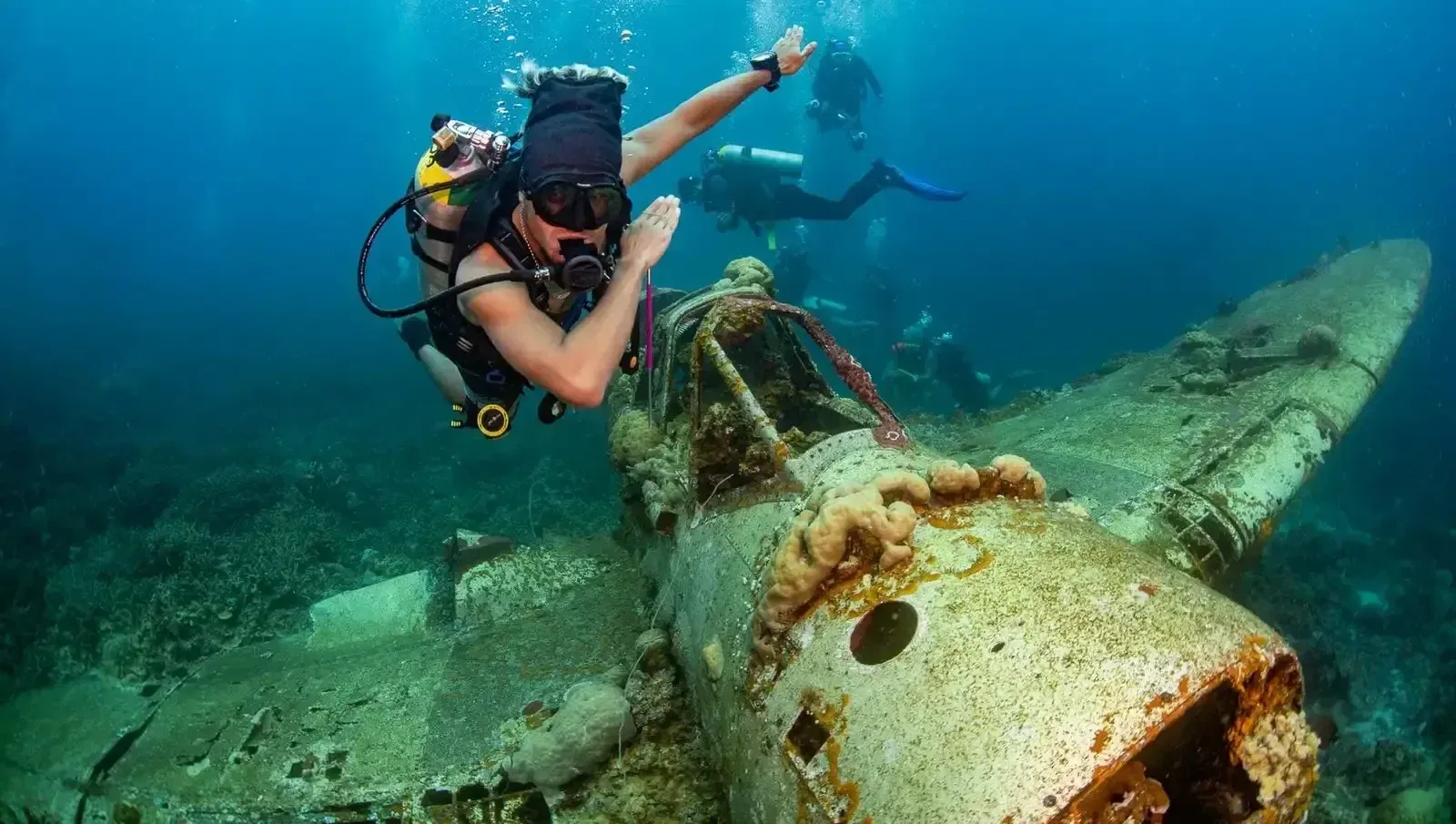
Scuba diver swimming over a sunken airplane wreck underwater
June 24, 2026
A ten-night dive adventure in Palau with Sam's Tours — Blue Corner, WWII wrecks, coral gardens, and a deeply personal brother reunion 20 years in the making.
People in swim gear practicing underwater breathing in a pool with a trainer
By Samuel Bachar • September 9, 2025
Scuba diving is an immensely enjoyable avocation that combines adventure, knowledge, skills, and self-discipline. Humans were not meant to spend much time underwater, but thanks to technology, we are able to enjoy the mysteries of the last frontier on this planet.
Rows of hanging clothes in a shop, with garments displayed from floor to ceiling.
By Samuel Bachar • September 9, 2025
Embarking on a scuba diving adventure is a thrilling experience. Whether you're a seasoned diver or a beginner eager to explore underwater, the importance of properly maintained and reliable scuba diving equipment cannot be overstated.
Scuba diver and sea turtle swimming above a colorful coral reef in clear blue water
September 9, 2025
A dive travel story following a week at Mayan Princess Beach & Dive Resort in Roatán, Honduras — exploring Caribbean reef sharks, wrecks, Garifuna culture, and local food.

A lush green island rising from bright blue ocean under a partly cloudy sky
September 9, 2025
Explore Saba's world-class diving, charming village life, and dramatic volcanic landscapes in this firsthand travel account from the "Unspoiled Queen" of the Caribbean.
Scuba diver photographing a colorful coral reef underwater
September 9, 2025
Explore how mindful diving practices and coral reef restoration efforts work together to protect our oceans, and discover how you as a diver can make a real difference.
Camera rig with dual LED lights on a wooden table, outdoors with a blurred beach background
September 9, 2025
A dive center owner's personal review of the Divevolk SeaTouch 4 Max underwater phone housing, comparing it to competitors and sharing pro tips for underwater phone photography.
Two scuba divers underwater, one in foreground with mask and orange fins, holding a guide line
By Samuel Bachar • September 9, 2025
Coastal ocean currents are fascinating phenomena that have a significant impact on marine environments and various aquatic activities, including diving. Understanding the diverse types of currents, the forces shaping their existence, their implications for divers, and the strategies for safe interaction are paramount for an enriching and secure diving experience.

Three side-by-side close-ups of a skin rash labeled by date, showing changing redness and texture
By Samuel Bachar • September 9, 2025
In the azure waters of the Caribbean, a silent menace is unraveling the vibrant tapestry of coral ecosystems, casting a shadow over the very heart of paradise. Stony Coral Tissue Disease (SCTLD), a devastating affliction first identified off the coast of Florida in 2014, has morphed into a formidable threat, leaving a trail of destruction across coral reefs in its wake.
Great white shark swimming underwater near a diver
By Samuel Bachar • September 9, 2025
Sharks, the ocean's silent hunters, have ignited a mix of fear and fascination for centuries. This guide equips you with the knowledge and best practices for an unforgettable encounter with sharks, ensuring their well-being and a healthy aquatic environment.

Show More